Ibraheem Badahdah
PhD Candidate @ UTS | Behavioral Scientist
I study why people struggle to turn good intentions into sustainable action—and translate behavioral science, marketing practice, and visual observation into evidence-led interventions for Saudi Arabia and the GCC.
Impact Is Driven by Insight
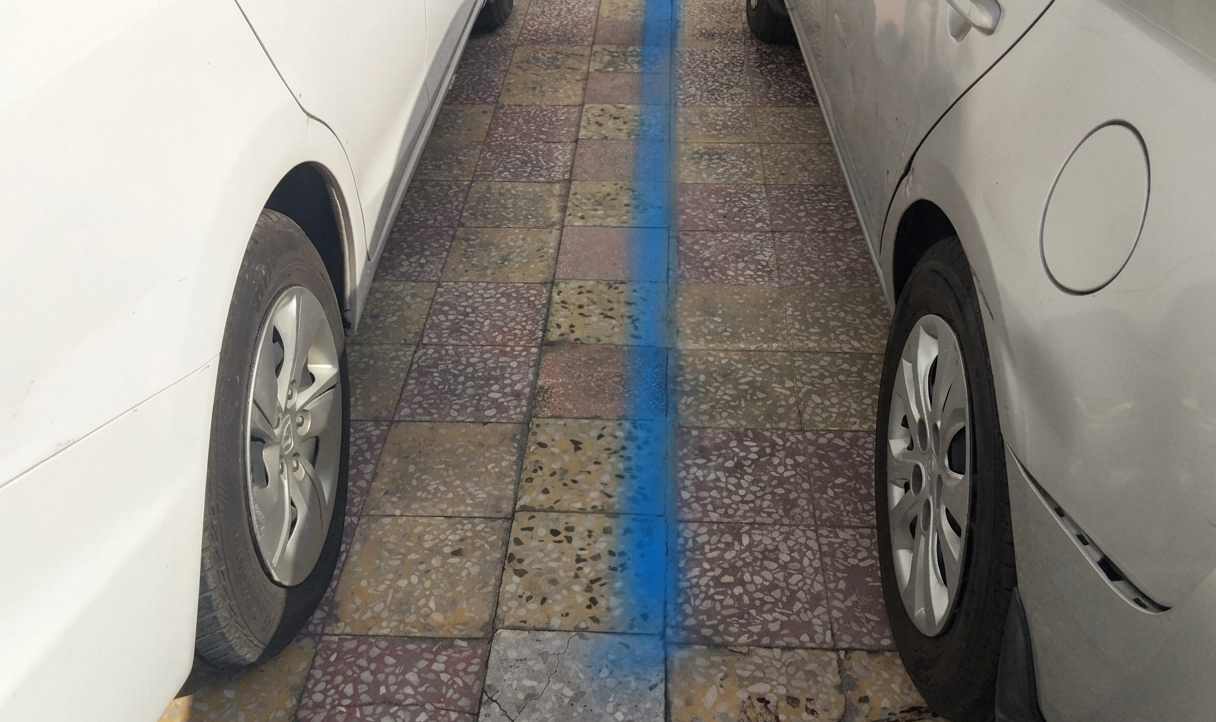
Two neighbors, six cars, one shared lot that barely fit everyone. The margin for error was zero. The smallest misalignment and we would lose a spot entirely. Nobody seemed bothered. Or if they were, they did not show it. I was. The space was always sufficient. The problem was that parking precisely in an unmarked space is harder than it sounds. Without a reference, you approximate. And approximations compound.
People were not being careless. They simply had nothing to anchor to. Then it clicked. I bought a tape measure and a can of blue spray paint and marked out the exact dimensions for each space on the pavement. The problem sorted itself. I may have pointed out the lines once.
That is what behavioral science looks like in practice. It does not have to be a campaign or a policy. Sometimes, it is a tape measure and a can of paint. The lever is the same: change the environment, and behavior follows.
Where It Started
The environment I grew up in shaped how I see consumption. In our household in Jeddah, nothing was wasted. Food was saved or passed to the birds outside. Appliances lasted a decade before being donated. Furniture was repaired, then passed on. It was not a philosophy anyone stated out loud. It was just how things were done.
Growing up introverted, I spent more time watching than participating. I noticed the gap between what people said and what they did. I noticed how small things—a cue, a context, a reframing—could shift behavior without anyone quite realizing it. I did not have a name for it yet.
One moment from a social psychology class in college stayed with me. A guest lecturer asked an auditorium of four hundred students how many considered themselves above average in math. Nearly everyone raised their hand. She then explained what had just happened: the above-average bias, a room full of people, all of whom thought they were above average. That was my first real exposure to cognitive bias. It did not leave me.
Ogilvy
A year in FMCG left me feeling that I was in the wrong place. I had time to think, and I used it. I started reading, taking courses, and trying to put language to questions I did not yet know how to ask.
joined Ogilvy. Over three years, I worked across public relations, events, and later digital and social media, across seven clients and under five different managers.
In public relations and events, I worked on Nissan projects including the Maxima launch and financial-results event. For one of those events, I managed the project independently after my direct manager and department head had left. All invited media attended, and 95% of them published coverage.
Later, with Hempel, a relationship that began in public relations continued into digital and social. One campaign took the form of a photography competition connecting the brand’s colours with Saudi colours, and culminated in an offline exhibition.
The work was demanding and unpredictable. When the team lost a third of its people, I stepped up. I learned that clarity of ownership and communication are themselves behavioural interventions: they change what people do. More importantly, my day job and my reading were finally about the same thing. I was analysing consumer behaviour daily and studying the science behind it on the side. The two kept feeding each other.
One course on advertising effectiveness brought another part of it into focus. It walked through the John Lewis Christmas campaigns, not the creative, not the awards, but how much every pound spent returned. An old campaign, measured properly, stripped of vanity metrics. I could not unsee it. This was not about reach or likes. It was about whether anything had actually moved.
The work at Ogilvy was rich. But it lacked the meaning and purpose I grew up with. The culmination of everything I had been doing and learning about behavioral science and impact measurement made academia the next logical step.
The Research
My PhD investigates the Value–Action Gap: why people hold genuine intentions to act sustainably and ethically, but do not consistently follow through. It sits at the intersection of sustainability and self—what we believe, what we value, and why neither is enough to change what we actually do.
Three studies. Each one is a different angle on the same problem.
Unused Utility
When someone upgrades their phone or replaces their laptop, we assume they assessed what they already had. People often neglect the remaining value of what they own, not out of carelessness, but because unused utility is invisible at the moment of decision. The new product is vivid. The old one just fades.
Making that remaining value salient changes the calculation. Once you can see what you still have, justifying the upgrade becomes harder. The intervention is simple. The question is what it makes visible.
Presented at EMAC 2026.
Tangibility
Ethical and sustainable claims are inherently vague. Fair trade. Eco-friendly. Sustainably sourced. They signal a general benefit without giving the mind anything specific to evaluate. At the moment of choice, vague often loses to concrete.
My research shows that unpacking these claims into specific, evaluable language changes what people choose. Not simply “fair trade,” but “ensures fair wages.” The claim becomes easier to evaluate. The choice becomes more connected to who you are. That is when it can move behavior.
Presented at ANZMAC 2023.
Food Waste
Awareness of food waste is high. Behavior change is not. The problem is not only information; it is motivation. Not all motives are equal, and not all motives last.
This study maps the spectrum of motives behind food-waste avoidance, from the immediate and practical to the deeply personal. The aim is to understand which motives are at work in a given audience and which may support interventions that last rather than fade.
Draft in progress
Marketing Philosophy
Marketing has a perception problem. Some of it is deserved. Too much of the field runs on hype, guru culture, and metrics that flatter the report rather than reflect reality. Reach. Impressions. Likes. Numbers that move without anything actually changing.
My position is simple: if you are not measuring the right metric, you cannot assess impact. Instead of asking only how far a campaign travelled, ask: did behavior actually change?
Evidence. Rigor. Measure what matters.
It is a simple philosophy: marketing the marketing, without the seasoning.
تسويق التسويق بدون بهارات..
Beyond Frames
In my spare time, I photograph. It is where I go to slow down, to notice, to be somewhere without an agenda. I have shown work in group exhibitions and won local and regional awards. But mostly it is the practice itself, and what it keeps teaching me about paying attention.
That practice has a philosophy. I learned to see without assumptions, moving from chasing conventional beauty to something harder and more honest: observing without a template, without inherited ideas of what a good image looks like. That shift, from preconception to pure perception, is not unrelated to how I approach behavior. Both require you to suspend what you expect to see and look at what is actually there.
Let’s connect
If you work on behavioral change in Saudi Arabia or the GCC, or are trying to understand why your audience is not doing what they say they will, I would be glad to hear from you.
I am particularly interested in conversations about research partnerships, behavioral interventions, applied consumer insight, and the relationship between academic research and practice
- Behavioral Solutions: I design interventions based on how people actually behave, including in Saudi and GCC contexts.
- Research and Insights: I translate academic findings into actionable direction, or help design research to understand a specific audience.
- Academic Mentorship: I support Saudi and Arab students considering postgraduate study and academic careers abroad.
To discuss a research question, behavioural or marketing challenge, potential collaboration, or postgraduate application:
Book an introductory conversation via Calendly or Email me at ibraheem@ibadahdah.com